• Skip to main content
  • Skip to footer

Brain Treatment Glenview IL

Brain Treatment Center of Glenview and Chicago IL, Utilizing MeRT, A Tailored TMS technology for treatment of Autism, Depression, PTSD and Concussions

773-970-6700
  • Home
  • About
    • Our Mission
    • About Dr. Paiman
    • Privacy Policy
    • Disclaimer
    • Terms and Conditions
  • Conditions
    • Autism
    • Depression
      • Is TMS Right for You?
      • TMS Therapy for Depression, Anxiety & OCD
      • TRICARE Coverage for Depression
      • Medicare Coverage for Depression
    • Anxiety
    • Traumatic Brain Injury (TBI)
    • Post-Traumatic Stress Disorder
    • “The Broken Brain”
    • Cognitive Decline
  • Autism
    • Autism Treatment FAQs
    • rTMS for Autism Research Studies
    • Autism and Sleep Problems
    • Leucovorin and Autism
    • ABA and MeRT
    • MeRT on “The Doctors”
  • MeRT
    • Reviews
    • Initial Analysis
    • Science
    • MeRT FAQs
  • Blog
  • Financing
  • Contact
    • Location
    • Places to Stay in Glenview, IL

Brain Treatment Glenview Team

Sports Concussions and TBI: What Happens After the Game Ends

September 8, 2026 by Brain Treatment Glenview Team

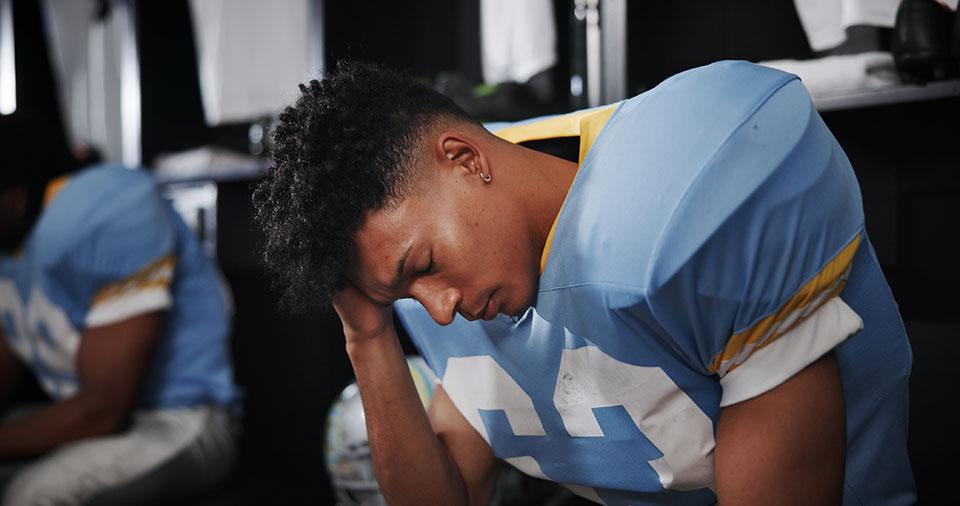
Male football player in a locker room after a sports concussion, holding his head in his hands.

The hit gets all the attention. The weeks and months afterward are when recovery is actually won or lost.

Every fall, thousands of athletes take a hit, get checked on the sideline, and are told to rest for a few days. For most, that’s the end of the story. But for a meaningful share of them — especially young athletes — the sideline conversation is just the beginning of something that can quietly follow them for months: headaches that won’t quit, a fog that makes homework take twice as long, a temper that feels like it belongs to someone else.

That gap — between “cleared to play” and “actually back to normal” — is where most of the real risk lives, and it’s where most of the public conversation about sports concussions still falls short.

How common is this, really?

More common than most parents realize, and more common than emergency room numbers alone suggest.

  • 7 in 10 sports- and recreation-related TBI ER visits are kids age 17 and under
  • 45% of those youth visits come from just three sports: football, basketball, and soccer
  • 2 in 3+ high school sports concussions come from athlete-to-athlete collisions, not falls

Source: CDC HEADS UP, Sports & Recreation-Related TBI Data

The highest concussion rates show up in boys’ tackle football, followed by girls’ soccer, boys’ lacrosse, ice hockey, and wrestling. And a 2025 CDC-supported national survey found the true number is likely far higher than any of those ER-based counts. Roughly 1 in 10 children and 1 in 8 adults sustain a concussion or TBI in a given year, largely because most people who get one never go to a hospital at all.

The danger nobody’s watching for: going back too soon

There’s an old idea in sports culture that a concussion is just something you play through — “he got his bell rung,” “shake it off.” That instinct is exactly backward, and in rare cases it’s dangerous in a very specific way.

Second impact syndrome

If an athlete takes a second hit before their brain has fully healed from the first, it can trigger rapid, uncontrolled brain swelling. This rare but life-threatening reaction can cause permanent disability or death within minutes. That’s why “he looks fine” is never enough evidence to send an athlete back in, and why every reputable return-to-play protocol requires an athlete to be fully symptom-free, at rest and during exertion, before they’re cleared.

This is the whole reason return-to-play protocols exist — not to be overly cautious, but because the second hit is genuinely more dangerous than the first.

What a real return-to-play protocol looks like

Guidance from the CDC and sports medicine groups generally follows the same shape: short rest, then a slow, monitored climb back to full activity, with a healthcare provider signing off along the way.

  • The first 24–48 hours: a medical evaluation, ideally the same day. Early rest is brief — usually just a day or two of lighter screens and mental demands, not total darkness and silence.
  • Within a couple of days: light activity, like walking, even with mild symptoms — cutting back only if symptoms clearly worsen.
  • Return to school before return to sport: most kids are back in the classroom, often with temporary accommodations, within a week or two — well before they’re cleared for their sport.
  • The sports protocol itself: a gradual, multi-step climb, with at least a day at each step and a return to the previous step if symptoms come back:
    • Light aerobic activity
    • Sport-specific movement
    • Non-contact drills
    • Full-contact practice
    • Return to competition

The whole sports return typically takes a week or more, start to finish—and every step requires a healthcare provider’s approval, not just the athlete or coach deciding they feel ready.

When “cleared” doesn’t mean “back to normal”

Here’s the part that gets the least attention: an athlete can complete return-to-play, pass every test on the checklist, and still be dealing with real after-effects weeks or months later. Most people recover within two to four weeks. For others, symptoms settle in for the long haul — sometimes past the three-month mark, a pattern often called post-concussion syndrome.

Those lingering after-effects tend to show up in a few areas:

  • Cognitive: brain fog, slower processing, trouble concentrating, memory lapses — often the reason grades slip the semester after an injury nobody’s still thinking about
  • Emotional: irritability, mood swings, anxiety, low frustration tolerance
  • Physical: persistent headaches, fatigue, dizziness, disrupted sleep
  • Sensory: light and noise sensitivity, ringing in the ears, blurred vision

Repeated hits compound this risk. Athletes who take multiple hits over a season — or a multi-year career — can accumulate effects that don’t show up on a single scan, which is often why a former player can look completely fine on paper years later and still be dealing with the same fog or irritability they had right after the injury. We go into more depth on what these after-effects look like, and how they differ from the acute injury itself, on our traumatic brain injury page.

What to do if the symptoms haven’t gone away
If an athlete in your life is well past their injury — cleared, back in school, maybe even back on the field — but still isn’t quite themselves, that’s worth taking seriously rather than waiting it out.

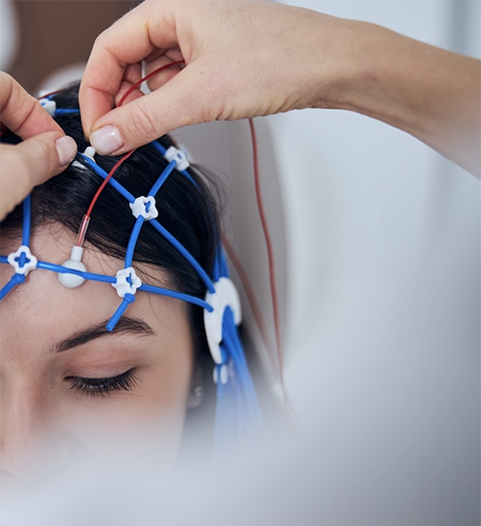
At Brain Treatment Center Glenview, we start with a qEEG brain map to see exactly how an injury shows up in someone’s brainwave patterns, then build a personalized MeRT® treatment plan around it — a non-invasive, drug-free option that can be used alongside other therapies an athlete may already be doing.

It’s not a substitute for emergency care or a return-to-play protocol; it’s for what’s left after that process. Retired NFL center Nick Hardwick and a former collegiate soccer player are among the athletes who’ve gone through treatment with us; you can read their stories, along with a closer look at how sports-related TBI after-effects show up and what MeRT does about them, on our Sports-Related Head Injuries page.

Still not feeling like yourself after a sports injury?

Talk with our New Patient Coordinator about whether MeRT can help with what’s lingering. Call 773-970-6700.

Read about MeRT for TBI →


This article is for general educational purposes and is not a substitute for professional medical advice, diagnosis, or treatment. If an athlete shows any danger signs after a head injury — worsening headache, repeated vomiting, slurred speech, seizures, unequal pupils, or increasing confusion — seek emergency care immediately by calling 911.

Sources

1. CDC HEADS UP — Sports & Recreation-Related TBI Data

2. CDC HEADS UP — What to Do After a Concussion

3. Concussion Alliance, summarizing 2025 CDC-supported national survey data — Prevalence of concussion higher than previously estimated

4. DuPage Medical/DCH — Second-Impact Syndrome: The Hidden Danger

5. Mayo Clinic — Persistent post-concussive symptoms

Filed Under: MeRT Tagged With: Sports Injuries, TBI & Concussion

A New Way to Approach Depression: Personalized TMS at Brain Treatment Center Glenview

August 10, 2026 by Brain Treatment Glenview Team

woman with depression looking out window

Depression doesn’t look the same for everyone, and when medication or therapy hasn’t brought the relief you were hoping for, it’s easy to feel stuck.

Transcranial Magnetic Stimulation (TMS) offers another option. This FDA-cleared, non-invasive treatment doesn’t involve medication or surgery and is designed to work directly with the areas of the brain tied to mood.

What Is TMS?

TMS uses gentle, focused magnetic pulses to stimulate areas of the brain that tend to be underactive in people with depression — particularly regions involved in mood regulation and executive function.

Because it targets those specific neural circuits rather than the whole body, TMS doesn’t come with the same systemic side effects often associated with antidepressant medication.

There’s no anesthesia and no incisions; you’re awake and alert throughout treatment, and you can return to your normal routine right after each session.

TMS is FDA-cleared to treat Major Depressive Disorder and Treatment-Resistant Depression, and it has been studied and used for years.

Personalized Care, Built Around You

No two people experience depression in exactly the same way, so treatment shouldn’t be one-size-fits-all either.

At Brain Treatment Center Glenview, TMS treatment begins with a comprehensive clinical evaluation — and when appropriate, additional brain-based diagnostics — to better understand how depression is affecting your brain function.

That information helps your care team tailor your treatment plan and monitor your progress along the way.

What to Expect

TMS sessions typically take place several days a week over the course of several weeks, with each session lasting about 30–45 minutes. You’ll sit comfortably in a chair while a technician delivers the treatment; there’s nothing to recover from afterward, so most people head straight back to work, errands, or the rest of their day.

Is TMS Right for You?

If depression has been part of your life for a while, and antidepressants or therapy alone haven’t gotten you where you want to be, it may be worth exploring TMS.

Many patients report meaningful improvement in mood, energy, sleep, and focus. And some are able to reduce or discontinue medication under their doctor’s supervision.

Our New Patient Coordinator is here to answer your questions and help you understand whether TMS could be part of your path forward. Call 773-970-6700 to schedule a consultation or fill out the form below.


Filed Under: TMS Tagged With: Brain Treatment Glenview, depression treatment Glenview IL, TMS for depression

There’s New Hope for PTSD — and It’s Now FDA-Cleared

June 12, 2026 by Brain Treatment Glenview Team

PTSD treatment with military veteran

If you or someone you love has been living with PTSD, this is the news you’ve been waiting for.

For a long time, people with PTSD have been told there are really only two options: medication or talk therapy. Both can help. But for many people, including a lot of veterans and first responders, they don’t go far enough. The anxiety, the sleeplessness, the hypervigilance, the emotional numbness — it all stays.

That’s why we’re so excited to share that MeRT® has just received FDA clearance as a treatment for PTSD. This is a genuine breakthrough. And it’s available right here at Brain Treatment Center Glenview.

So What Is MeRT, Exactly?

MeRT stands for Magnetic EEG-guided Resonance Therapy. We know that’s a mouthful. Here’s what it actually means.

We start by taking a detailed map of your brain activity. Then we use that map to deliver gentle magnetic pulses specifically targeted to the areas of your brain affected by trauma. No medication, no surgery, no downtime. Just a personalized treatment plan built entirely around how your brain actually works.

That last part is important. This isn’t a one-size-fits-all approach. Every person’s brain is different, and MeRT treats it that way.

Why This FDA Clearance Is Such a Big Deal

Until now, there has been no FDA-cleared device treatment specifically for PTSD. That’s a striking gap when you consider that PTSD affects an estimated 13 million Americans.

The clearance for MeRT changes that. It was supported by a rigorous clinical trial that showed meaningful reductions in PTSD symptom severity — real results in real patients. And it was developed in part by Dr. Erik Won, a former Navy flight surgeon who watched his fellow service members come home from Iraq carrying wounds no one could see. He spent years working toward this moment. His message when the clearance came through was simple: hope.

That word says it all.

Who This Is For

MeRT may be right for you if you’ve been living with PTSD and you’re looking for something different. That might mean:

  • You’ve tried medication or therapy and still don’t feel like yourself
  • You’re a veteran or first responder dealing with trauma that never fully went away
  • You want a treatment that’s drug-free and non-invasive
  • You’re also struggling with depression, anxiety, or sleep issues alongside your PTSD
  • You want answers — not just more guesswork

PTSD doesn’t just affect combat veterans. It affects survivors of accidents, violence, and loss. It affects first responders who have seen things they can’t unsee. And it affects everyday people who have experienced something that changed them. If that’s you, this matters.

We’re Ready to Help

At Brain Treatment Center Glenview, we’ve been offering MeRT as part of our approach to brain health for some time now. Every patient journey starts with a full brain evaluation, so we’re always working from your data, not a generic protocol.

We serve veterans and active-duty military through TRICARE, and we welcome civilian patients from across the North Shore and the Chicagoland area. Wherever you’re coming from and whatever brought you here, we’re glad you’re taking this step.

Ready to learn more? Reach out to us to schedule a consultation. We’d love to talk with you about whether MeRT might be the right next step.


ABOUT BRAIN TREATMENT CENTER GLENVIEW

Brain Treatment Center Glenview is a TMS and MeRT therapy clinic serving patients in Glenview, IL, and the greater North Shore and Chicagoland area. Led by Dr. Mina Paiman, our team specializes in personalized, non-invasive brain stimulation for PTSD, depression, autism, TBI, and other conditions. We proudly serve veterans and TRICARE-eligible patients.

Filed Under: MeRT Tagged With: FDA-clearance, MeRT, PTSD

Footer

Clinic Address

Brain Treatment Center Glenview
2634 Patriot Blvd, Unit C
Glenview, IL 60026

Contact Us

Contact our New Patient Coordinator for info about treatment: 773-970-6700

Clinic Reception: 224-492-5868

Follow Us


Follow Us on Instagram

Copyright © 2026 · Brain Treatment Center of Glenview IL· Log in