
A Personalized Treatment for the Lingering After-effects of Traumatic Brain Injury and Concussions
MeRT® is a non-invasive, drug-free protocol built around your own brainwave patterns. It’s designed to support recovery from the symptoms that remain after a head injury, once the injury itself has been medically treated.
Get Your Life Back after a Traumatic Brain Injury
I’m back! My TBI turned me into someone I barely recognized. I was depressed, mean, and short-tempered, pushing through life filled with frustration and a deep sense of sadness that this was it. I’m so glad I was wrong. This treatment changed everything, and I am forever thankful.”
– MeRT Patient After TBI Treatment
A traumatic brain injury (TBI) is just that — traumatic. First, you have the initial trauma of the impact. Then you have the trauma that comes afterward, affecting your emotions, mental clarity, memory, and so much more.
Sometimes people can recover well after a concussion or other head injury. Other times, however, things just keep getting worse and affect every aspect of life.
We understand. That’s why we’re so proud to offer MeRT® treatment for TBI and concussions.
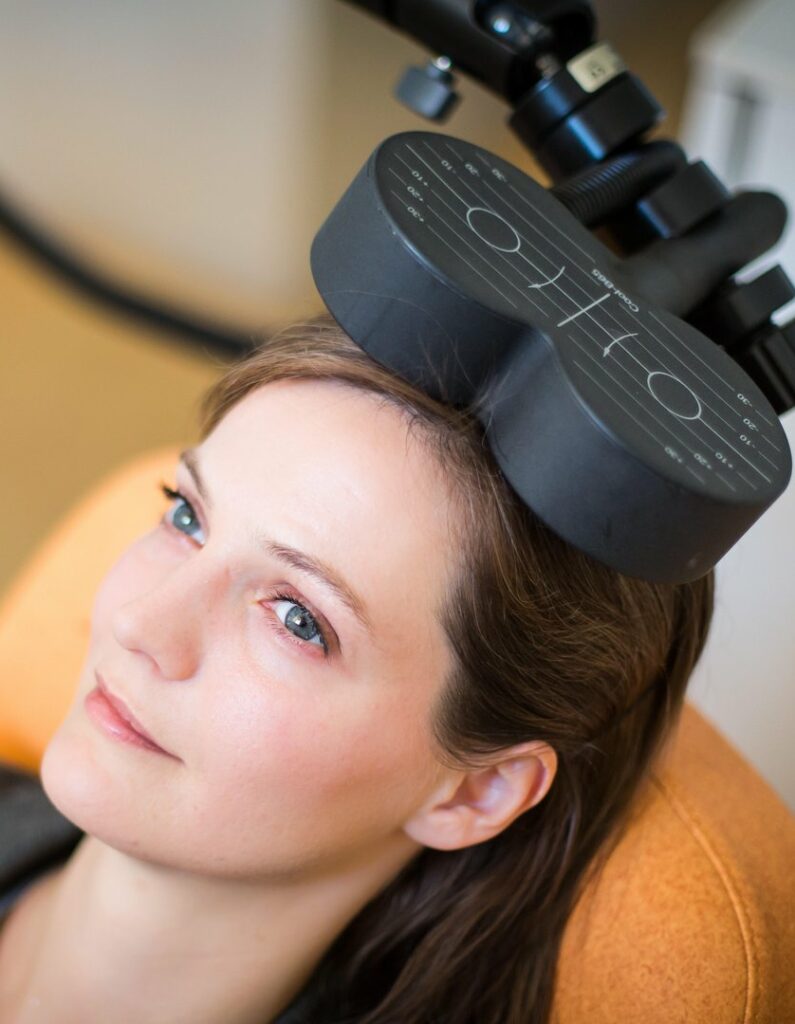
MeRT stands for Magnetic e-Resonance Therapy, a non-invasive, drug-free, gentle treatment to improve brain function and communication. It’s a highly customized use of transcranial magnetic stimulation (TMS) based on sophisticated diagnostics.
Studies show that altered neural circuits can change brain function and contribute to TBI symptoms. Our innovative MeRT program helps correct patterns of dysfunction in the brain before they become detrimental.
Plus, many people with traumatic brain injuries go through other therapies to help them regain function and cope with their injury or disability. MeRT treatment can be used with these therapies — and can often improve their effectiveness.

Contact our New Patient Coordinator
Or fill in the form at the bottom of the page for more information or to book an initial consultation.

MeRT is Precisely Tailored to Your Unique Brain Patterns and TBI Symptoms
Traumatic brain injury is often called a “silent epidemic” because it’s far more common than most people think and can have a significant impact if not treated. Yet, treating TBI can be complex, as each individual experiences unique symptoms.
That’s why we tailor MeRT protocols to each patient’s unique brain. We begin with a comprehensive analysis of your brainwave patterns to determine where they are out of sync. We then plan a tailored treatment program using magnetic waves to stimulate those specifically targeted areas of the brain.
MeRT is painless and completely non-invasive. We use no drugs or anesthesia, and you are fully conscious throughout the treatment. With MeRT, we can address your specific TBI symptoms and help relieve them.
MeRT treatment is both effective and lasting. This can mean a return to a far higher quality of life — for you, your loved ones, your associates, and your community.
What is a Traumatic Brain Injury?
Per the National Institutes of Health, a TBI “can be caused by a forceful bump, blow, or jolt to the head or body, or from an object that pierces the skull and enters the brain. … Some types of TBI can cause temporary or short-term problems with normal brain function, including problems with how the person thinks, understands, moves, communicates, and acts. More serious TBI can lead to severe and permanent disability, and even death.”
Some people are at a higher risk for brain injuries, such as athletes, the elderly, and children and teens who are involved in physical activities. However, anyone can get a TBI, regardless of age or health.
Treating this type of head injury matters. Often, people assume they’re fine once the initial headache goes away. However, unseen complications can arise and affect many aspects of life, including emotions, memory, and clear thinking.
TBIs can also result from multiple hits for athletes and repeated blast exposures for military members. These injuries can accumulate and can lead to far more severe complications.
If you’ve ever experienced a traumatic brain injury or concussion, no matter how mild you think it was, it’s vital to know the symptoms.

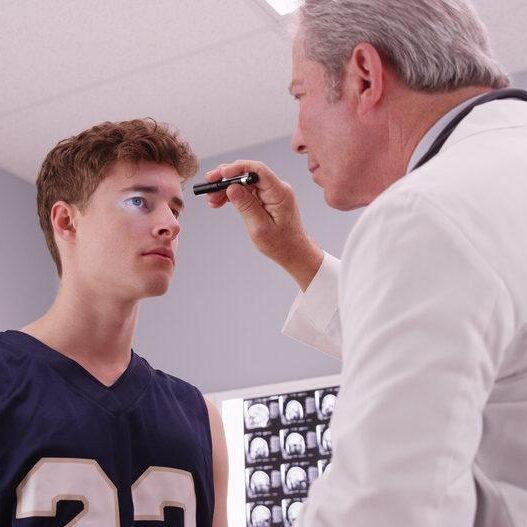
7 in 10
sports- and recreation-related TBI emergency room visits are for kids age 17 and under
45%
of those youth ER visits come from just three contact sports: football, basketball, and soccer
2 in 3+
high school sports concussions happen from athlete-to-athlete collisions, not falls
Source: CDC HEADS UP, Sports & Recreation-Related TBI Data
Sports-Related Head Injuries
As noted above, athletes are one of the groups most likely to sustain a TBI — and one of the most likely to have after-effects go unaddressed once the season ends.
Rates are highest in boys’ tackle football, followed by girls’ soccer, boys’ lacrosse, ice hockey, and wrestling. And research increasingly shows that emergency-room counts capture only a fraction of the real picture: a 2025 CDC-supported national survey found that roughly 1 in 10 children and 1 in 8 adults sustain a concussion or TBI in a given year — far more than ER visits alone would suggest, since most people never go to the hospital at all.
Why after-effects are especially common in athletes
Athletes are often cleared to return to school, work, or daily life before subtler symptoms — trouble concentrating, mood changes, sleep disruption — have fully resolved. As mentioned above, repeated hits over a season or a career can also accumulate in ways a single scan won’t show. That’s often why a former athlete can look “fine” on paper years later and still be dealing with the same lingering fog, irritability, or headaches they had right after their injury.
Where MeRT fits in
Once an athlete has been cleared by their physician or athletic trainer and any return-to-play protocol has run its course, MeRT starts with a qEEG brain map to see how their specific injury shows up in their brainwave patterns. Treatment is then built around those individual patterns — not a generic protocol — to support the brain’s own recovery process for the symptoms that rest and training-room care alone haven’t resolved. Retired NFL center Nick Hardwick and a former collegiate soccer player are among the athletes who’ve gone through MeRT treatment (see patient stories below).
MeRT does not replace concussion protocols, baseline testing, or return-to-play clearance from a qualified medical provider — it picks up after that process, not instead of it.
Our Medical Director, Dr. Mina Paiman
Dr. Mina Paiman’s dedication to treating traumatic brain injury is personal. Her husband, a U.S. Army veteran, sustained a TBI while serving in Afghanistan — an experience that brought the realities of brain injury into her own home, long before it became a focus of her medical practice.
That firsthand experience gave Dr. Paiman a depth of understanding that goes beyond clinical training. She has seen up close what TBI can do to memory, mood, sleep, and daily functioning, as well as the toll it takes on spouses and families who are navigating recovery alongside their loved one. That perspective shapes how she approaches every TBI patient at Brain Treatment Center Glenview: with clinical rigor, but also with genuine empathy for what patients and their families are going through.
As Medical Director, Dr. Paiman draws on both her Family Medicine background and her personal history to guide patients through MeRT treatment for TBI, offering not just a treatment plan, but the reassurance of working with someone who truly understands the journey.


Traumatic Brain Injury Symptoms
As we have noted, your traumatic brain injury symptoms will be unique to you. And symptoms can vary in severity. However, some of the most common include:
- Unconsciousness
- Head pain, headaches
- Fatigue, lack of energy
- Changes in pupil size and vision
- Vertigo or lightheadedness
- Issues with memory
- Disorientation or mental confusion
- Decreased cognitive function
- Unusual emotional reactions
- Rage or irritability
- Feelings of sadness or hopelessness, depression
- Isolation or social withdrawal
- PTSD (post-traumatic stress disorder)
- Anxiety, nervousness, panic attacks
- Weakness in facial muscles
- Generalized weakness or loss of function
- Incontinence
- Respiratory difficulties
- Sensory abnormalities (numbness, tingling)
- Hearing loss or ringing in the ears (tinnitus)
How MeRT Treatment Works to Relieve TBI Symptoms
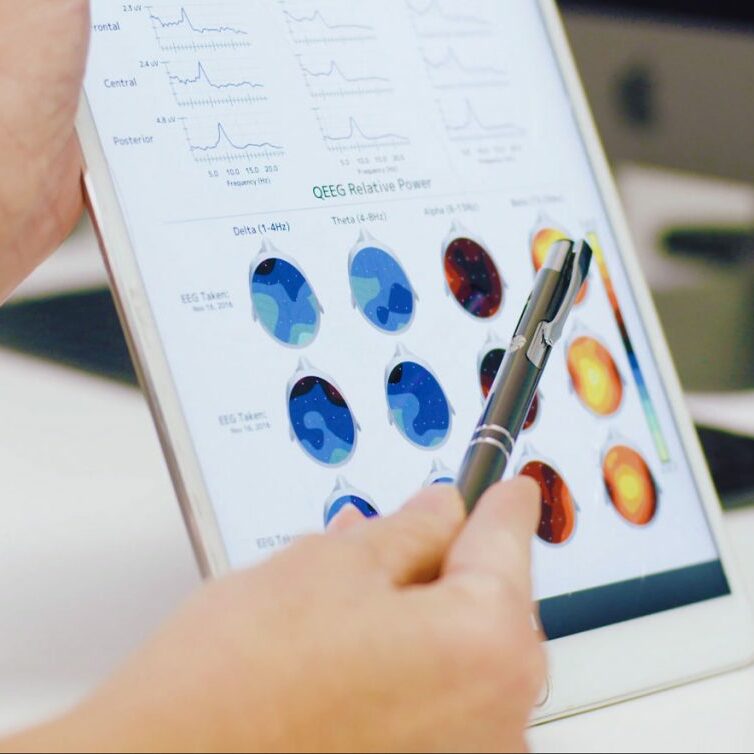
What makes MeRT unique is the way we analyze each patient’s brainwave patterns. We do this using a qEEG (quantitative electroencephalogram), also known as brain mapping.
Studies have shown that patients with TBI symptoms have clearly visible markers in their EEG studies. Research has shown that people who have experienced a traumatic brain injury will have higher power in their delta band frequencies and lower power in the alpha bands.
Once we identify the precise brain imbalance, we can then strengthen the brainwave activity with targeted TMS (transcranial magnetic stimulation).
Much of the initial MeRT research has been done by the U.S. Department of Defense for veterans returning from combat. An article published in Defense One further explains the DOD’s research and the benefits of MeRT for those suffering from TBI.
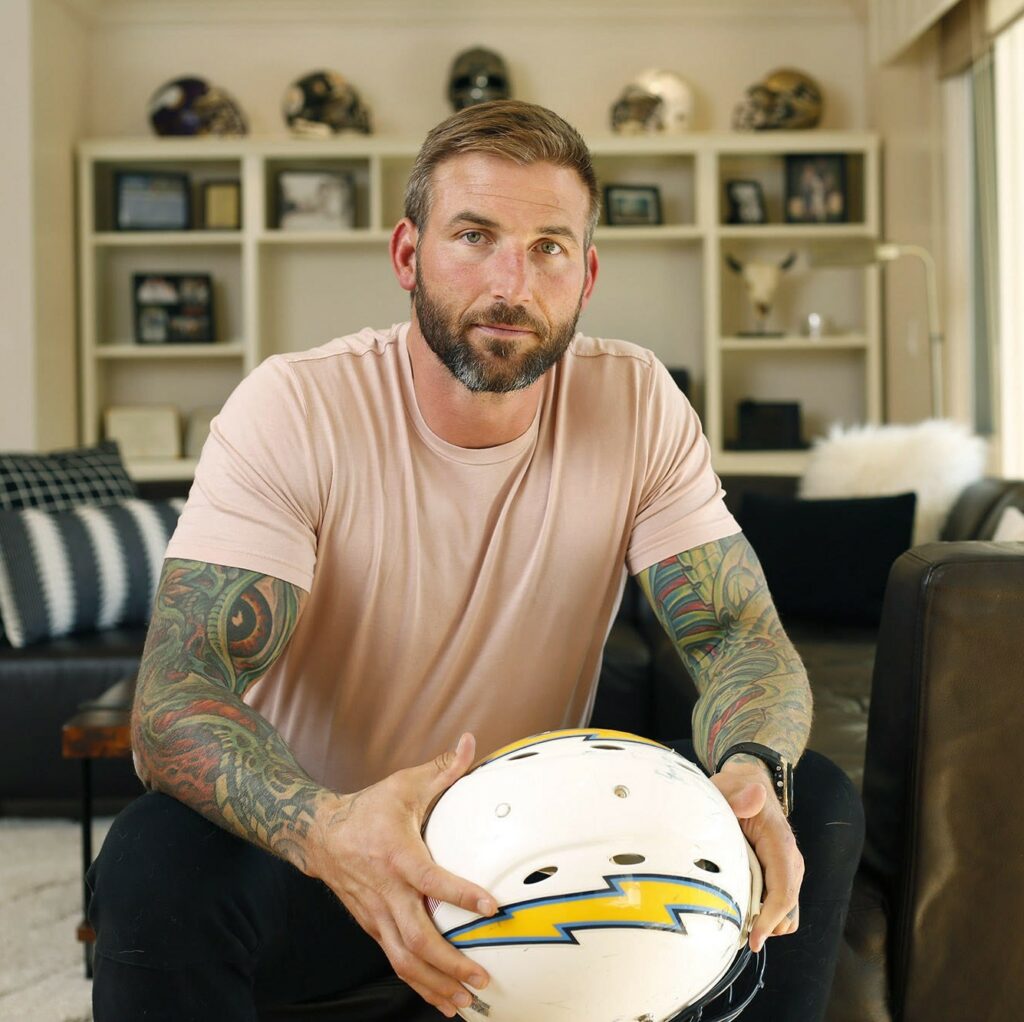
NFL Veteran Achieves Lasting Results from MeRT Treatment for Traumatic Brain Injuries
I’m two or three months past my last treatment, and I can honestly say that my brain is in a better place than it was before. The emotional highs and lows that I was living with have stabilized. My cognition took off during that period (of treatment), and it hasn’t slowed down since.”
– NICK HARDWICK, RETIRED NFL CENTER, CHARGERS
“The brain seems to be responding to these injuries the same way.”
“What we’re finding is that the brain responds to insult the same way, whether it’s chronic sleep deprivation, whether it’s the mechanical injury of head-to-head contact repeatedly on a football field, or whether it’s being exposed to repeated blast injuries in the military or just direct contact with IEDs. The brain seems to be responding to these injuries the same way. …
“For so many years now, there’s been this feeling of helplessness that concussions are just a fact of life and there’s not a lot that we can do. I think we’re starting to get down to, at a foundational level, the root cause of mechanisms of injury, which will lead us down the pathway of finding solutions.”
– Dr. Erik Won, President and Chief Medical Officer of Wave Neuroscience

Contact our New Patient Coordinator
Or fill in the form at the bottom of the page for more information or to book an initial consultation.
What to Expect: The Steps of MeRT Treatment for Traumatic Brain Injury
MeRT is a relatively new treatment, and you may have many questions about whether it’s right for your TBI symptoms. We understand — and that’s why your first step is a simple phone consultation with our New Patient Coordinator. During this free consultation, you can discuss your symptoms and history, including any treatments you have already tried or that are ongoing. You can ask any questions you have, and she will explain our protocols, fees, and treatment details.
Initial Testing and Consultation
If, after your phone consultation, you want to take the next step, we can schedule two appointments: one for testing and one for a doctor’s consultation. Each appointment will take 45 minutes to an hour.
At the first appointment, our neurotechnician will perform a qEEG and an EKG. These simple, painless tests will show us exactly what is happening in your brain.
A few days later, after our doctor and the scientific team have analyzed your test results, you will have a one-on-one consultation with the doctor. You can come in for this appointment or attend virtually. The doctor will review the test results with you and answer your questions. Then, together, you’ll determine whether you are a candidate for treatment.
Treatment Period
If you and the doctor decide to move forward, we’ll schedule your TMS treatment in two-week increments. We perform treatments daily, Monday to Friday, and a typical treatment session takes about 45 minutes.
Each day, you will sit in a comfortable chair while the neurotechnician administers treatment using a hand-held magnet near the scalp. We deliver the magnetic impulses for 6-8 seconds each minute, and you may feel a slight sensation during treatment. It feels like gentle taps on the head and is not painful.
After two weeks of treatment, we will perform a new qEEG to note changes and make any needed modifications. The doctor will also meet with you regularly to monitor and manage your progress.
MeRT treatments usually run from 6 to 8 weeks. In some cases, however, we recommend additional treatment to get the best possible results. Each individual is unique, and protocols may vary.
Read What a Few MeRT Patients Have to Say!
Testimonials from Actual MeRT Patients
“I’m back! My TBI turned me into someone I barely recognized. I was depressed, mean, and short-tempered. And I pushed through life filled with frustration and a deep sense of sadness that this was it. I just had to keep pushing through life with an overwhelming tiredness. I’m so glad I was wrong, and I think my direct reports and family are even more thankful. This treatment changed everything, and I am forever thankful.”

41-year-old male with TBI
Executive“In the ensuing months after the concussion, I just wasn’t myself. My academics began to suffer, too. I didn’t feel right. My EEG showed me that something had physically changed with how my brain functioned. After three days of treatment, I felt substantially better. After two weeks, I felt like I did before my injury. MeRT was life-changing.”

21-year-old female with TBI
Collegiate Soccer Player“I’ve made significant progress in cognitive ability, stress tolerance, and mental clarity. I can handle decisions much better and think more clearly. And I have been able to significantly decrease conflict with my family and actually lead much better.”

Male with TBI
Executive“I felt like I was alone, even though I was surrounded by love and care. It was just a cloud that would linger over my life every now and again. The Brain Treatment Center helped me better understand what was going on in my head. And after a month of treatment, I was grateful to be depression-free and medication-free for the first time in my life.”

Jim
PatientFrequently Asked Questions
No. MeRT is designed for the after-effects that remain once the acute injury has been medically treated — not for emergency or urgent care. If a head injury just occurred, seek emergency care first.
They’re the symptoms that can linger after the initial injury heals — things like persistent headaches, memory trouble, mood changes, sleep problems, dizziness, and sensitivity to light or noise. They’re often invisible on standard imaging and can last weeks, months, or longer.
Very. About 7 in 10 emergency room visits for sports- and recreation-related TBI involve kids age 17 and under, and contact sports like football, basketball, and soccer account for 45% of those visits (CDC). Many more go unreported to any ER at all.
Standard TMS protocols are often generalized. MeRT starts with a qEEG brain map of your own brainwave activity, then tailors the treatment plan to the specific patterns identified in your results.
No. MeRT is non-invasive, drug-free, and uses no anesthesia — you’re fully conscious throughout. Most people describe the sensation as gentle tapping on the head.
No. MeRT is non-invasive, drug-free, and uses no anesthesia — you’re fully conscious throughout. Most people describe the sensation as gentle tapping on the head.
Only once you’ve been medically evaluated and any acute or urgent concerns have been ruled out or resolved by a physician. From there, timing is discussed individually during your consultation.
Most patients complete daily sessions, Monday through Friday, over roughly 6–8 weeks, with a progress qEEG around the two-week mark. Each session takes about 45 minutes. Some patients need additional treatment beyond that window.
Candidacy is confirmed individually — based on your health history and your qEEG results — during the doctor consultation. It generally starts with a free phone consultation with our New Patient Coordinator.
Candidacy is evaluated individually with your doctor. For young athletes specifically, MeRT is considered only after standard return-to-play protocols and physician clearance — it’s a complement to that process, not a replacement for it.
Coverage isn’t guaranteed. Some patients have reported partial reimbursement for EEGs, clinical evaluations, and treatment depending on their plan, but Medicare typically doesn’t cover the treatment itself. We accept major credit cards and CareCredit, and can provide documentation for you to submit to your insurer.
It’s a simple, painless 45–60 minute session that records your brain’s electrical activity along with an EKG, giving your care team a baseline picture of your brainwave patterns to build a personalized treatment plan from.
Contact Us for More Information about TBI Treatment with MeRT
We would be honored to help you free yourself from your TBI symptoms and achieve a higher quality of life. We know this isn’t a light decision. After all, you may have tried many therapies and medications but haven’t seen the results you hoped for.
That’s why your first step is a free, no-obligation consultation with our New Patient Coordinator. She will take the time to listen, answer questions, explain our treatment protocols, and more.
We’ve seen some astonishing results with MeRT treatment for Traumatic Brain Injury. And we’d love nothing more than to help you achieve results, too. So go ahead. Make the call. It could be the first step to a whole new life.

Or fill in the form below, and we will contact you.
Contact Form

Insurance Coverage and Payment Options
Our clinic will be able to provide you with all the documents you would need to submit to your health insurance company for any possible reimbursement.
There have been some patients who have reported receiving some reimbursement for EEGs, clinical evaluations, and treatment, but this is largely dependent on your type of health coverage. Medicare patients have reported that their coverage does not reimburse for the treatment itself.
We accept all major credit cards, and you can also apply for CareCredit.